
2.6 KiB
Flexible transit routing
This package contains a router, which produces access and egress legs for the RAPTOR algorithm, as well as flex-only itineraries
The data format is based on the GTFS-Flex v2.1 draft.
Algorithm
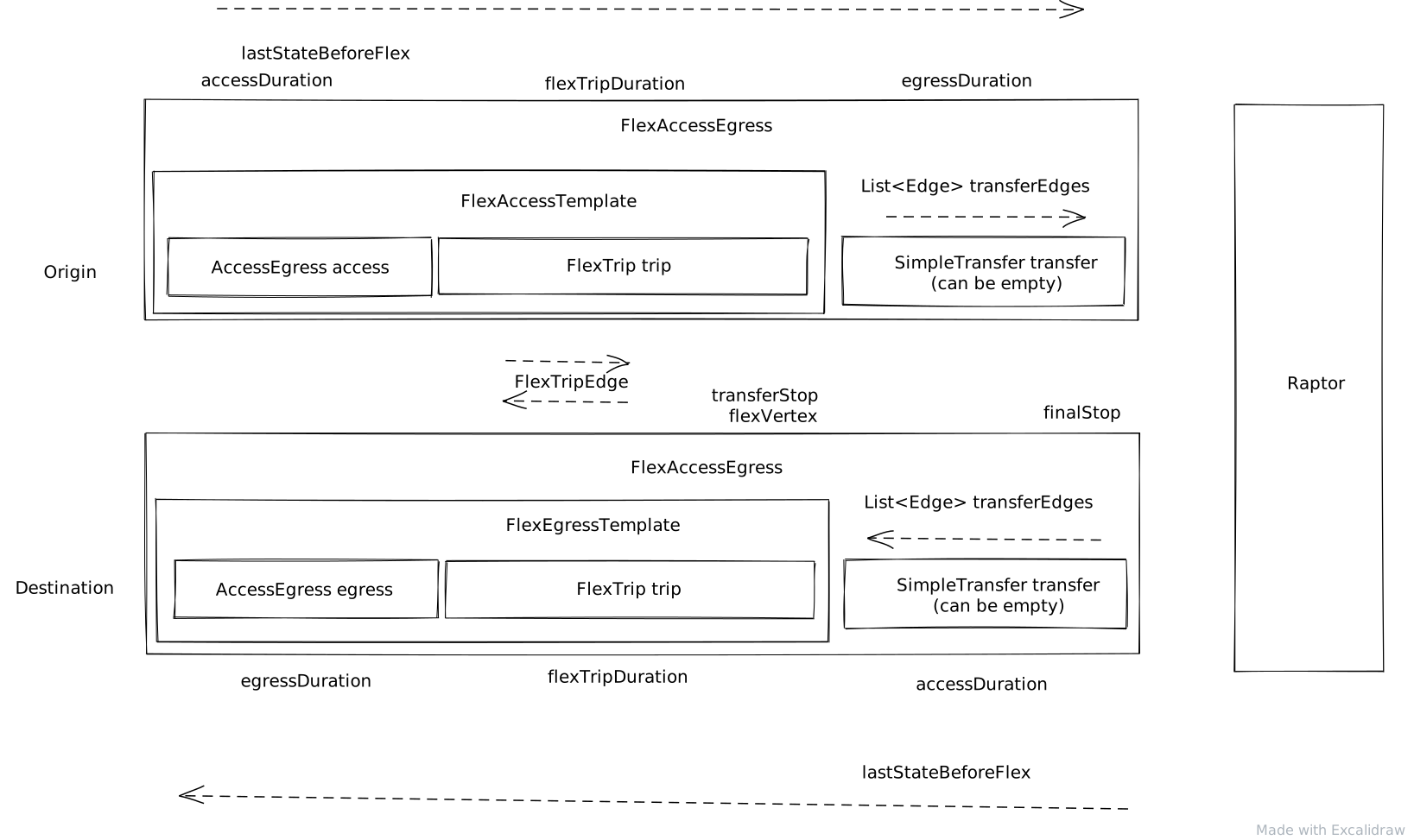
The algorithm runs in two phases.
- Flex access/egress templates are generated from the places reachable by the access/egress mode. The templates contain information about how to reach the flex service and the service itself.
- From these templates, flex accesses are generated by alighting at all places after the boarding. If the alighting is not at a stop, transfers are generated to all stops reachable by walking distance. For egresses the flow is the opposite.
These accesses and egresses can then be fed to the RAPTOR algorithm similar to how the street accesses and egresses are.
FlexTrip
As there is a wide variety of flexible transit services, the business logic for each type exists in separate classes. To add a new type of service it should be simple to add a new class extending the FlexTrip class, with the required methods.
UnscheduledTrip
This type of trip consists any number of service areas, with a set operating window. The trip is possible at any time within the set window, and the class can represent multiple potential trips.
You can travel from a stop time to any other stop time that comes later in the order of stop times but not the other way around (even when the time windows would otherwise allow this). If you want this to happen then you need to create a trip going the opposite direction.
Note, that in a case of three or more flex zones the GTFS Flex spec doesn't exactly specify what the driving duration is to go from the first to the third zone or if indeed the second zone needs to be passed through.
This topic is discussed in https://github.com/MobilityData/gtfs-flex/issues/76
ScheduledDeviatedTrip
A scheduled deviated trip represents a single trip, which operates not only via stops, but also via locations, which can be either areas or lines, and groups of locations and stops. As the trip has a set order of stops, and usually includes at least one timed stop, the driving times are calculated from the schedules, providing the beginning of the window for boarding and the end of the window for alighting at the flexible locations, in order to make sure that the trips are possible.
ContinuousStopsTrip
A continuous stops trip is a trip which serves regular stops, and where boarding and alighting are possible also between at least one pair of stops.